Unbreak My Heart
Your Grief Recovery Space
You have a right to grieve without shame.
You Are Not Alone
Grief Doesn't Only Follow a Funeral
Loss takes many shapes. None of them need anyone else's permission to be mourned. If you have lost any of these, your grief is real.
The Loss of a Life
- •A husband or wife: the person who knew you best.
- •A parent, child, sibling, or dear friend.
- •A pastor or spiritual leader who felt like family.
- •A pregnancy or baby loss of any kind.
- •A pet who was part of the family.
Other Losses That Bring Grief
- •A marriage or relationship, through divorce, separation, or a breakup.
- •A job, career, or purpose you loved.
- •A home, after a fire, flood, storm, or other disaster.
- •A church or faith community you lost.
- •A health diagnosis that changed everything.
- •Your sense of safety, after an assault, abuse, or violence.
- •Your financial security: a business lost, bankruptcy, or sudden ruin.
If any of these are yours, you are not overreacting. You are grieving.
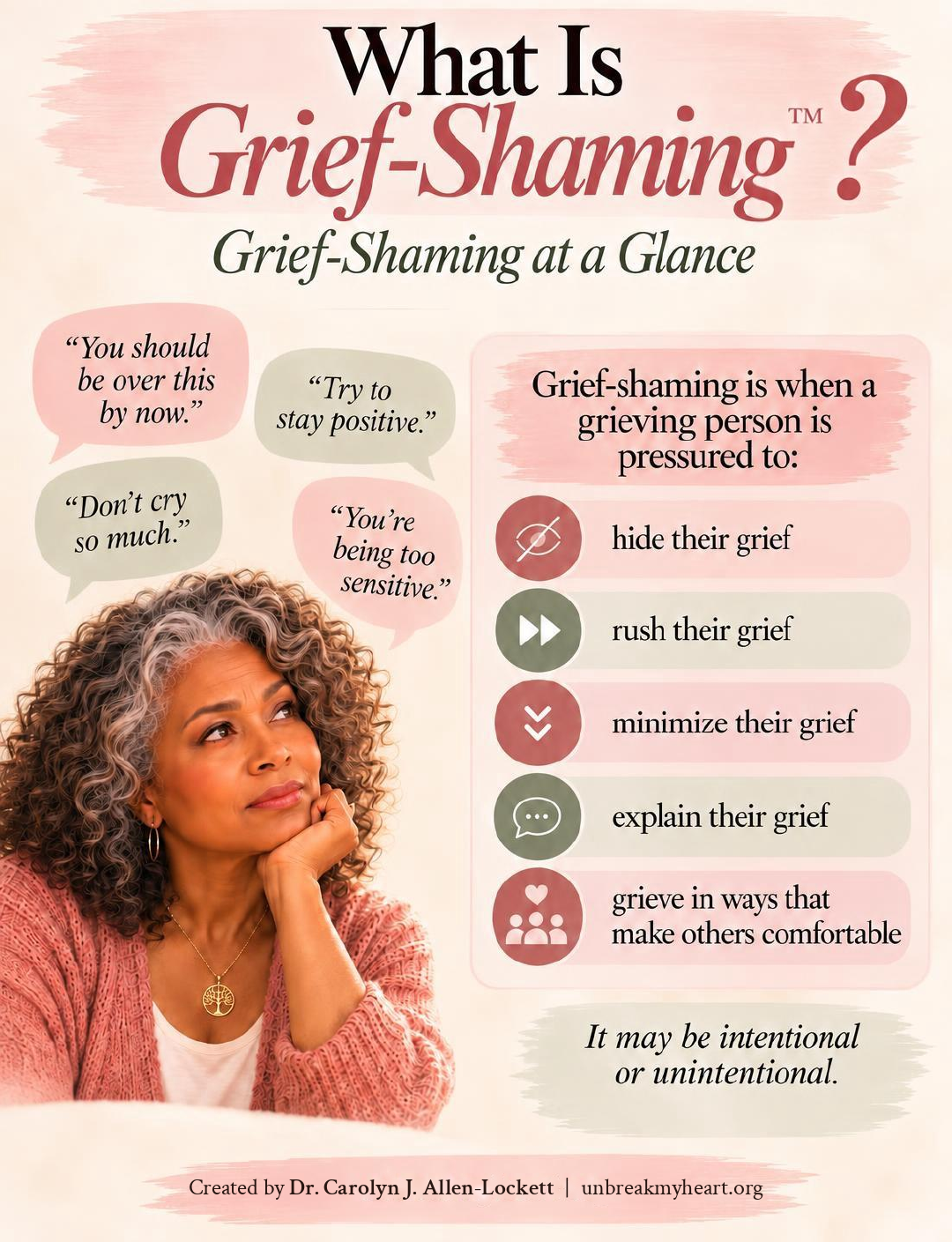
Your Grief Belongs to You
What Is Grief-Shaming™?
Grief-shaming occurs when a grieving person is pressured to minimize, hide, dismiss, rush, explain, or change their grief to meet someone else's expectations or comfort. Have you heard any of these?
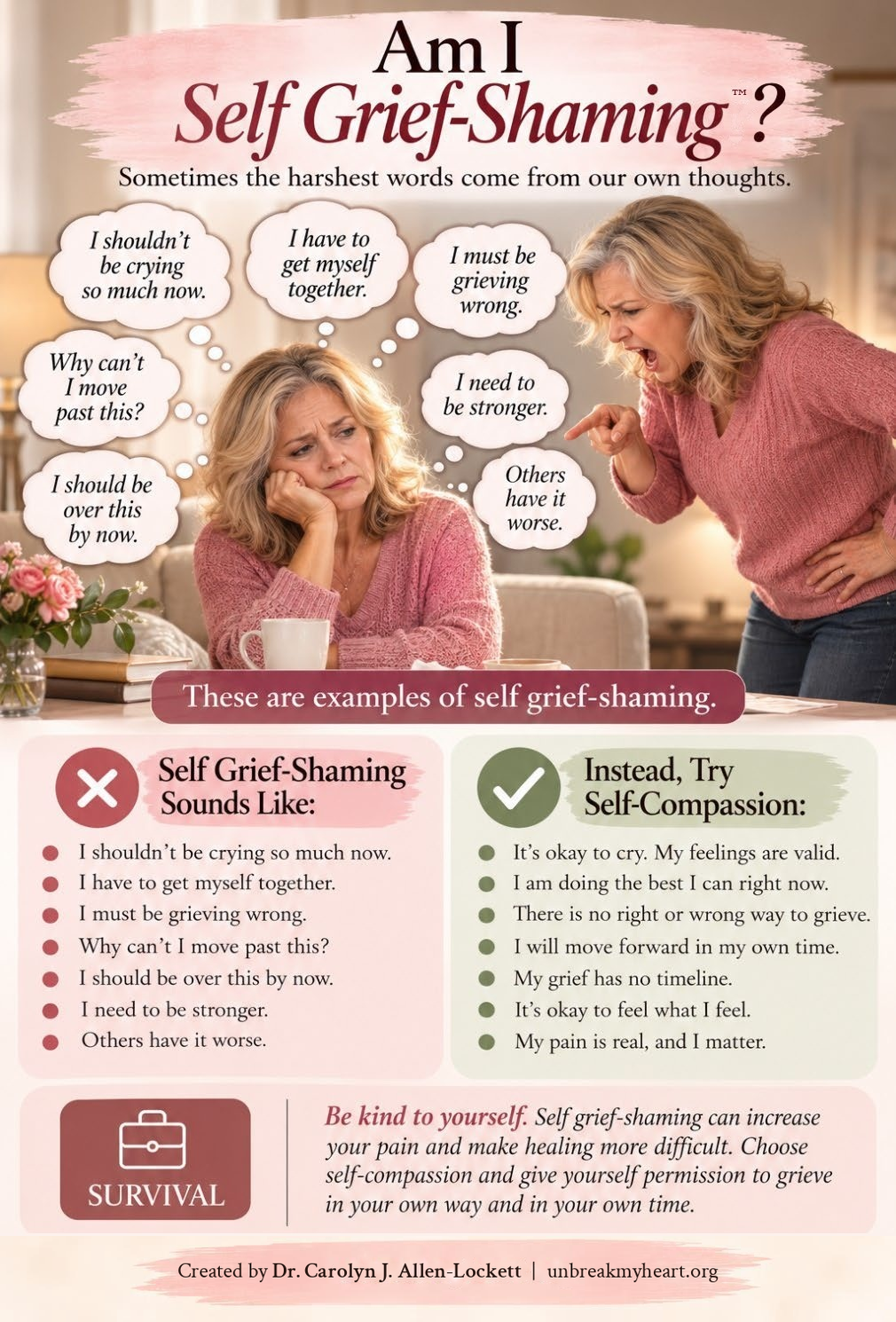
Self-Grief-Shaming
When Their Voice Becomes Your Voice
Sometimes grief-shaming no longer comes only from other people. Over time, we can begin repeating those expectations to ourselves. Do any of these sound familiar?
Ask yourself:
Am I giving myself permission to grieve, or have I begun judging, rushing, correcting, or minimizing my own grief? If so, is that adding another layer of pain to what I am already carrying?
Support & Guidance
How Can Unbreak My Heart Help You?

Join the Community
Only another widow truly understands what this kind of loss can feel like. Widows of Destiny is a community where we learn to recognize grief-shaming, protect our peace, and move from surviving to thriving.
Widows of Destiny - Join HereNot a Widow? We need your voice.
Become a Defender of Grief. Learn to recognize when grieving people are being dismissed, rushed, or judged, and become a compassionate voice that helps protect their right to grieve and heal on their own timeline.
Become A Defender of Grief
Have You Experienced Grief-Shaming or Self-Grief-Shaming?
Download our free mini checklists to recognize subtle grief-shaming from others, and from yourself, so you can heal in a healthy way on your own timeline. Protect your personal peace today.
Grief-Shaming ChecklistSelf-Grief-Shaming ChecklistProtect Your Peace
Holiday Grief Coping Planner
Your grief does not need anyone’s permission. What would help you feel supported this holiday?
Today's Affirmation
My story is not over. I WILL survive and thrive again.
“Behold, I will do a new thing; now it shall spring forth; shall ye not know it? I will even make a way in the wilderness, and rivers in the desert.”Isaiah 43:19, KJV
Where Am I Today?
Grief Is Not a Cycle. It Is a Landscape.
Dr. Elisabeth Kübler-Ross named five common experiences of grief. They do not happen in order, they do not follow a set cycle, and you may feel several at once or return to one years later. Recognizing where you are today is the first step toward moving forward. Tap every feeling that fits you right now.
There is no wrong answer. Choose as many as you need.
This check-in is for education and comfort, not diagnosis. If you are in crisis in the U.S., call or text 988.
What Happens Next?
Recognizing grief-shaming is the beginning, not the destination.
The goal is NOT:
- •To stop loving him.
- •To stop talking about him.
- •To stop feeling his absence.
- •To erase the life you shared just because that life has changed.
- •To stop saying his name because someone else is uncomfortable hearing it.
- •To become the woman you were before he died.
- •To force your grief to fit someone else's box or timeline.
- •To pretend you're okay for anybody else's comfort or expectations.
The goal IS:
- •To learn how to give grief its rightful place without allowing it to dictate your journey and future.
- •To give yourself permission to experience moments of joy without feeling that happiness diminishes your love for him.
- •To carry the love, the memories, and even the absence forward with you as you heal and survive the loss.
- •To discover how to live and thrive in the life that remains and become the new you that emerges, stronger and celebrating your resilience.
- •To recognize and resist grief-shaming so someone else's discomfort or imposed timeline does not interrupt your natural grieving process.
- •To discover that moving forward does not require leaving him behind.
Two things can be true.
- I can miss him and still have a wonderful day.
- I can cry for him and laugh until my stomach hurts.
- I can wish he were here and still be grateful for the life in front of me.
- I can carry grief and experience joy.
- I can love the life we had and learn to love the life I have now.
- I can continue loving him while continuing to live.
You WILL get through this!